
Georgia doesn't have a single "storm season" — it has overlapping threat windows that keep Lilburn homeowners on alert from March through November. Spring severe thunderstorms, summer microbursts, fall tropical remnants, and occasional winter ice events all threaten the trees on your property. The homeowners who fare best aren't just lucky — they're prepared.
The most effective emergency tree strategy is prevention. Homeowners who invest in pre-storm tree inspections and preventive pruning spend 60–80% less on tree-related storm damage than those who wait for emergencies. Preparation isn't just cheaper — it's safer.
Georgia's Multiple Storm Threat Windows
March – May: Spring severe thunderstorms bring the first round of dangerous straight-line winds. These storms often produce wind gusts exceeding 60 mph with little warning. Lilburn's position in Metro Atlanta's eastern suburbs puts it directly in the path of storms moving from the west.
June – August: Afternoon pop-up thunderstorms are daily occurrences. While individually less severe than spring storms, they saturate soil over weeks, weakening root systems. Microbursts — localized downdrafts with wind speeds exceeding 100 mph — are the hidden danger of Georgia summers.
September – November: Tropical storm and hurricane remnants push through Georgia with sustained winds and heavy rain. Even a weakened tropical system can dump 6–10 inches of rain on Gwinnett County in 24 hours, creating the worst conditions for tree failure.
December – February: Ice storms are rare but devastating. A quarter-inch of ice accumulation adds hundreds of pounds to every tree's canopy, snapping limbs and toppling pines throughout neighborhoods in Lilburn, Tucker, and Stone Mountain.
Pre-Storm Preparation Strategies
The work you do before storm season determines 90% of your outcome. Here's a priority checklist:
- Schedule a professional tree assessment in February or March. Identify every tree that poses a risk to your home, garage, fence, or vehicles.
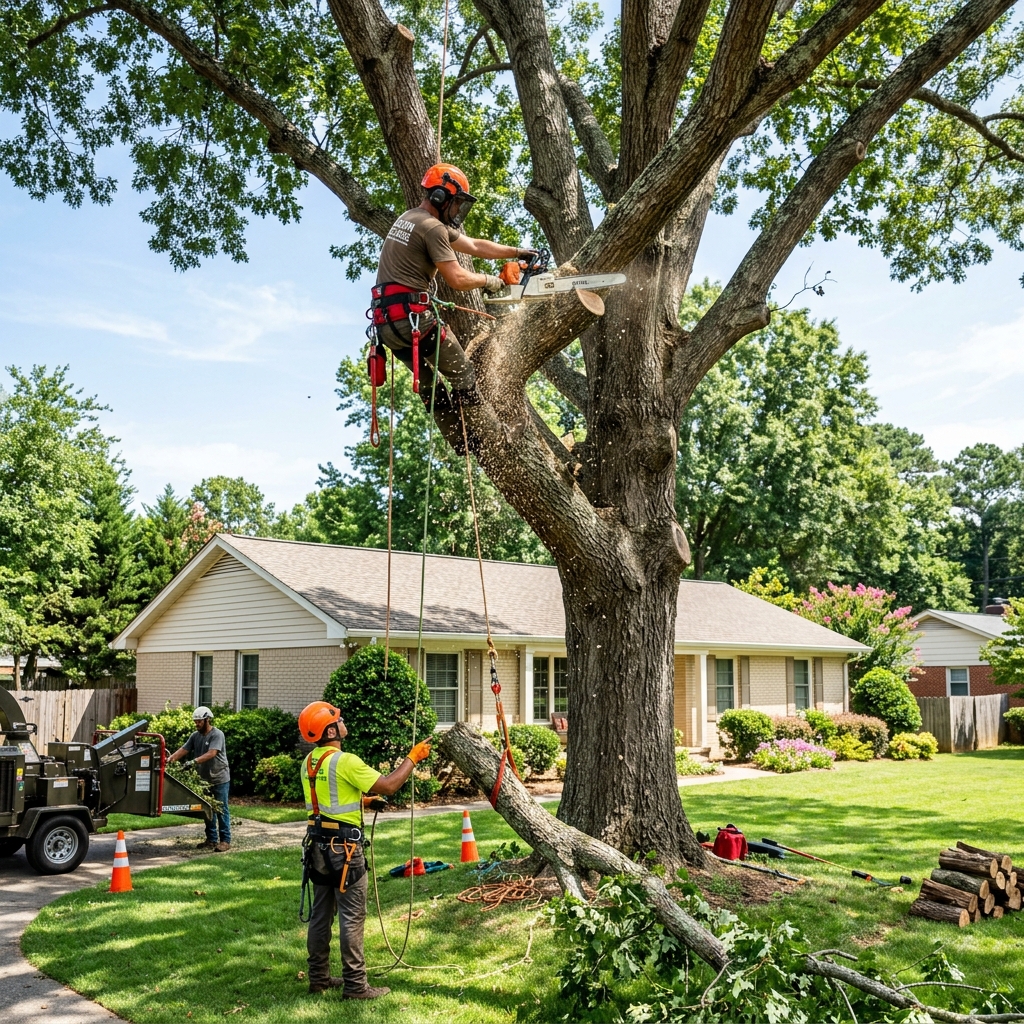
- Remove dead and dying trees before they become emergency calls. A planned removal in March costs half what an emergency removal costs in July.
- Thin dense canopies on large oaks and pines. Professional canopy thinning reduces wind load by allowing air to pass through rather than against the crown.
- Remove deadwood from all trees near structures. Dead branches are the first things to fall in any wind event.
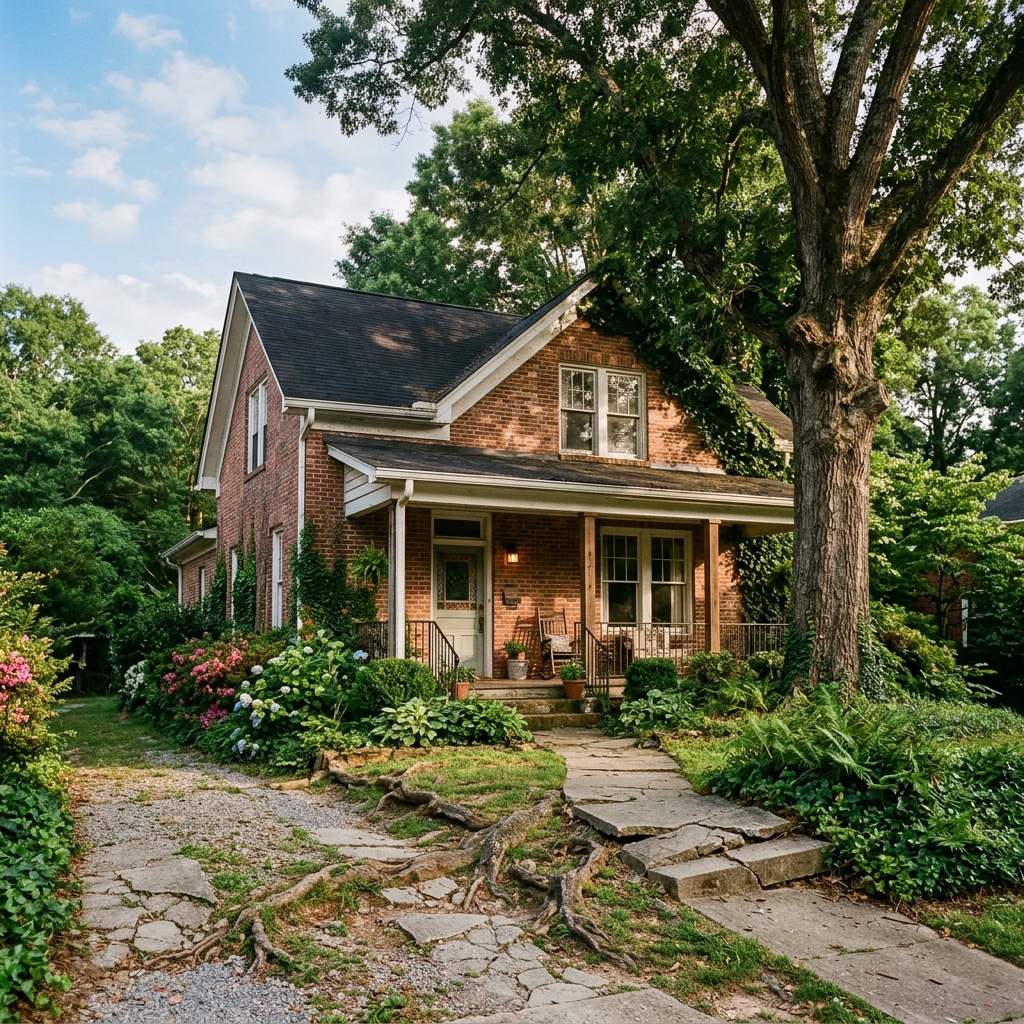
- Address leaning trees — any tree that has developed a new lean should be assessed immediately. This often indicates root failure that will worsen in the next rain event.
Create a "storm kit" for your property: a folder containing your insurance policy details, your tree service company's emergency number, pre-storm photos of your property from all angles (for insurance documentation), and a list of every significant tree on your lot. Having this ready before a storm hits saves critical time during the chaotic aftermath.
During the Storm
Stay indoors, away from windows. If you hear a tree fall, do not investigate until the storm passes. Downed power lines, flying debris, and secondary tree failures create active hazards during the event.
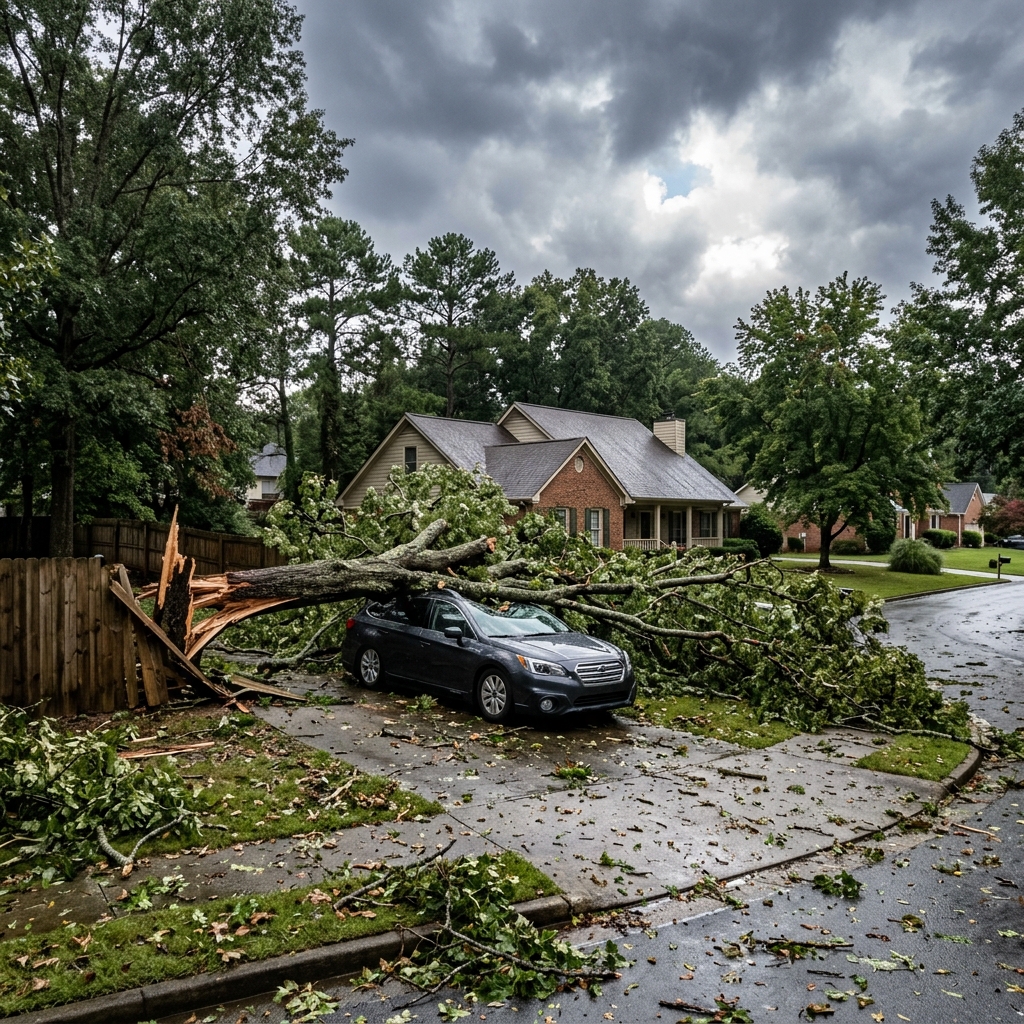
If a tree hits your home during the storm, move to the opposite side of the house. Do not attempt to exit through areas where tree debris is present — structural damage may have weakened the roof or walls above doorways.
Post-Storm Recovery Plan
After the storm passes, follow this sequence:
- Account for everyone in your household
- Check for gas leaks (smell, hissing sounds)
- Stay away from any downed lines — call Georgia Power
- Document all damage with photos and video before any cleanup
- Contact your insurance company within 24 hours
- Call a licensed emergency tree removal service for professional assessment
Avoid "storm chasers" — unlicensed, uninsured crews that flood into areas after major storms offering cheap tree work. They often cause additional damage, leave debris behind, and disappear when problems arise. Use only established local tree service companies with verifiable insurance and references.
Building Long-Term Storm Resilience
Plant wind-resistant species. Live oaks, bald cypress, and longleaf pines handle Georgia storms better than loblolly pines, Bradford pears, and water oaks. As you remove problem trees, replace them with species that will perform better for the next 50 years.
Maintain a regular pruning schedule. Trees pruned every 3–5 years develop stronger structure, better wind resistance, and fewer dead limbs that become storm projectiles. This single ongoing investment prevents more storm damage than any other strategy available to Lilburn homeowners.
Frequently Asked Questions