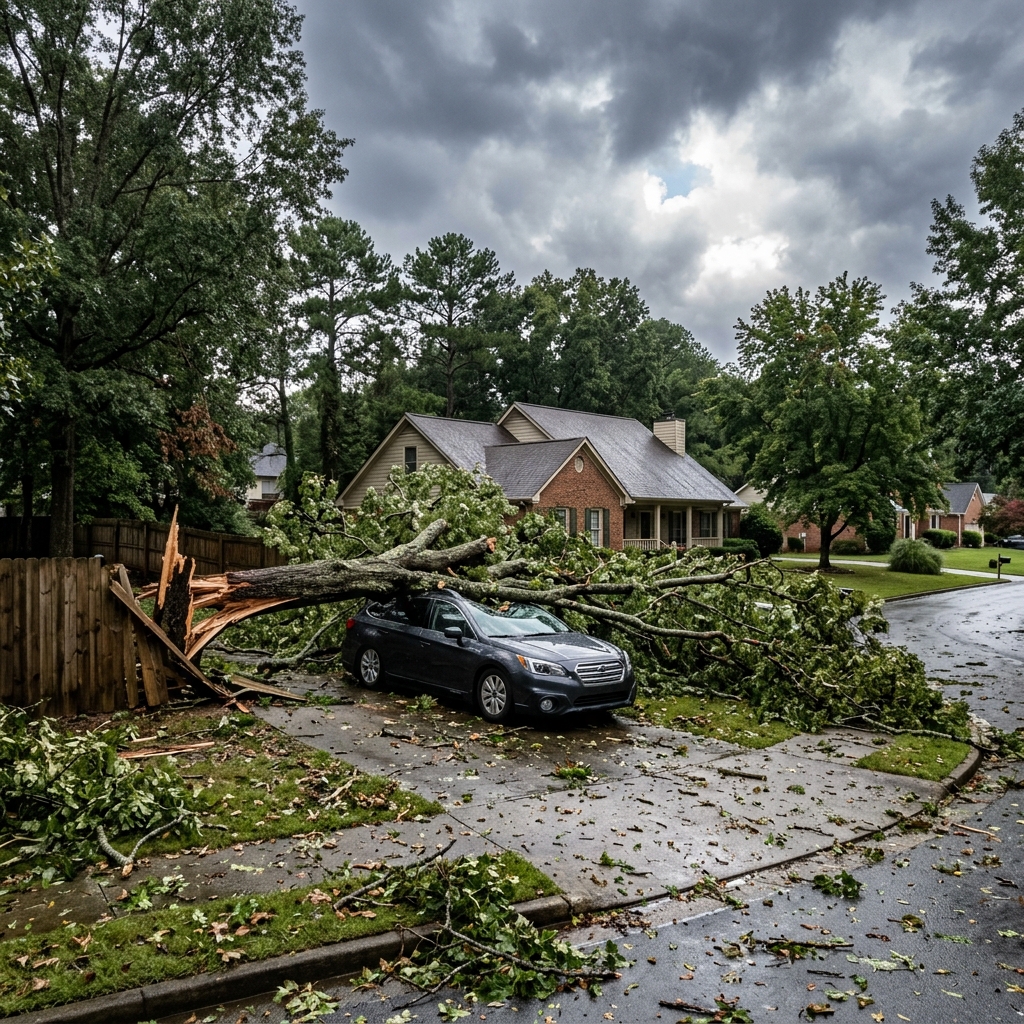

When a severe thunderstorm rolls through Lilburn and you hear that unmistakable crack of splitting wood, time matters. The first decisions you make after a tree comes down can affect your safety, your insurance claim, and how quickly your property gets cleared. Here's a step-by-step breakdown from crews who respond to these calls every storm season.
After storm damage, prioritize safety first — stay away from downed trees and power lines. Call Georgia Power if lines are involved. Then document everything with photos before contacting a licensed emergency tree removal service in Lilburn.
What to Do Immediately After Storm Damage
Stay inside until the storm passes completely. Lightning and falling debris are active threats during and immediately after severe weather. Once conditions calm, assess from a safe distance before approaching any downed trees.
- Check for injuries first. Make sure everyone in your household is safe.
- Look for downed power lines. Any wire on the ground or touching a tree should be treated as live. Stay at least 35 feet away and call Georgia Power at 1-888-891-0938.
- Document everything. Take photos and video of all damage before anything is moved or cleaned up.
- Contact your insurance company within 24 hours to report the damage.
- Call a licensed tree service for professional assessment and safe removal.
Safety Hazards Most People Miss
Downed trees create hazards that aren't always obvious. Damaged trees often have broken branches suspended in the canopy — called "widow makers" in the industry — that can fall without warning hours or days after the initial event.
Leaning trees that didn't fall completely are under extreme tension. The forces in a partially fallen tree are unpredictable, and cutting into one without understanding load distribution can cause the tree to spring violently. This is why storm-damaged tree work has the highest injury rate in the tree care industry.
Even root balls of uprooted trees are dangerous. They can shift and settle, and standing near an exposed root plate when it moves has caused fatalities.
Never use a chainsaw on a storm-damaged tree yourself. The tension and compression forces in broken wood are invisible and unpredictable. Professional crews in Gwinnett County use specific cutting techniques — bore cuts, snap cuts, and tension/compression analysis — designed for storm-damaged wood. This isn't the time for DIY.
When You Need Emergency Tree Removal
Not every storm-damaged tree requires emergency response. Emergency calls should be reserved for:
- Trees on or leaning against your home or any occupied structure
- Trees blocking your only driveway or exit
- Trees on vehicles
- Trees touching or near downed power lines
- Trees that could fall on neighboring homes
A tree that fell in your backyard and didn't hit anything can usually wait for a standard-rate appointment within a few days. You'll save 25–50% compared to emergency rates.
What to Expect From an Emergency Tree Crew
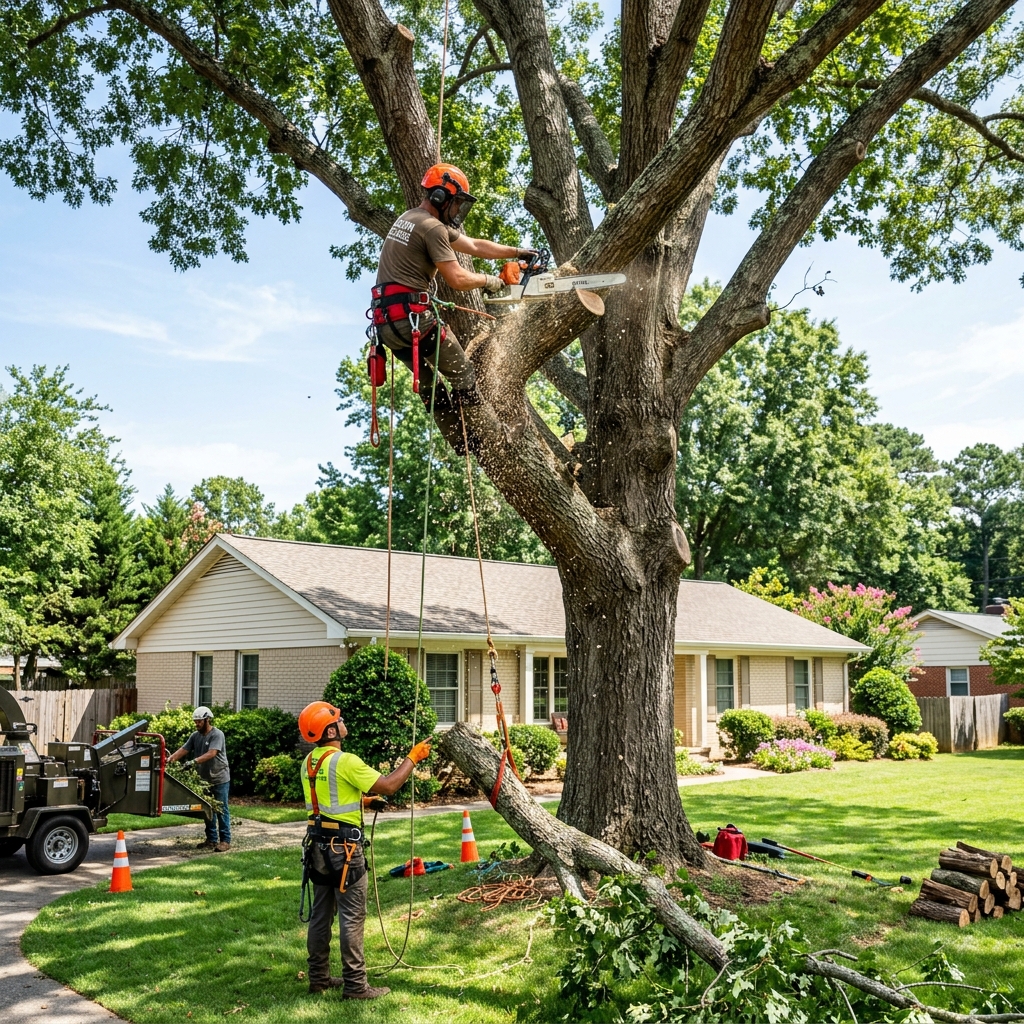
A professional storm damage cleanup crew arrives with chainsaws, rigging equipment, a chipper, and often a crane for complex situations. They'll assess structural damage, identify secondary hazards, and create a plan to remove the tree safely.
For trees on homes, the process usually involves sectional removal — cutting the tree into manageable pieces from the top down while controlling each section with ropes. This prevents additional structural damage during the removal process.
Complete cleanup typically includes cutting, chipping brush, hauling logs, and basic debris removal from the affected area. Structural repairs to your home are separate and handled by a contractor, not the tree service.
Emergency Tree Removal Costs in Lilburn
- Single tree on structure: ,500 – $4,000 depending on size and complexity
- Driveway clearing: $500 – ,500
- Full property cleanup: